Guide
How to Replace Refined Sugar in Seasonal Home Baking
Transitioning away from refined sugar in the kitchen is an invitation to explore the deep, nuanced flavors of the natural world. This guide focuses on using whole-food sweeteners and seasonal produce to create soul-satisfying bakes that celebrate the pantry and the harvest.
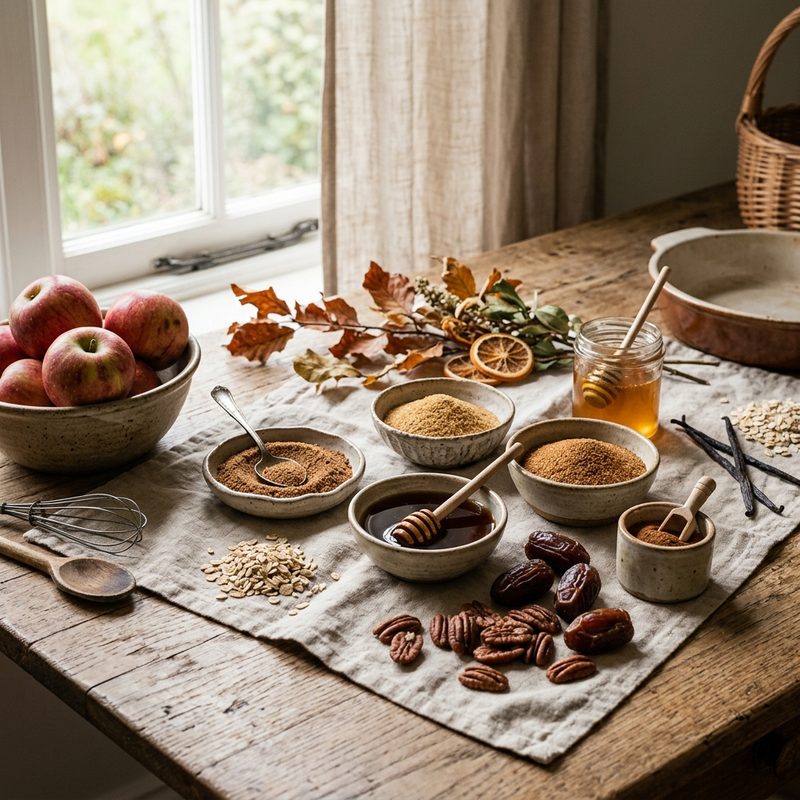
Understanding the Role of Sugar
Before replacing sugar, it is vital to understand that it does more than just sweeten; it provides structure, moisture, and browning (the Maillard reaction). When you swap white sugar for a whole-food alternative, you are often introducing extra moisture or fiber, which will change the crumb of your cake or the snap of your cookie. Always consider the texture you are aiming for before choosing your substitute.
Working with Liquid Sweeteners: Honey and Maple
Honey and maple syrup are the workhorses of the whole-food kitchen. Because they are liquid, you cannot simply swap them 1:1 for granulated sugar without adjusting the rest of the recipe. For every cup of honey or maple syrup used, reduce the other liquids in the recipe (like milk or water) by about 1/4 cup. Honey is sweeter than sugar, so you can often use 3/4 cup for every 1 cup of sugar. Maple syrup is excellent for fall bakes featuring squash or apples, while honey shines in summer floral recipes.
The Magic of Date Paste
Date paste is perhaps the most whole-food-aligned sweetener available, as it retains the fiber of the fruit. To make it, soak pitted Medjool dates in warm water until soft, then blend with a small amount of the soaking liquid until smooth. You can generally use date paste in a 1:1 ratio for sugar in muffins, quick breads, and brownies. Because date paste is thick, it adds a lovely density to grain-free bakes using almond or coconut flour, helping to bind the crumb together where gluten is absent.
Harnessing Seasonal Fruit Purees
In the height of summer or the depth of winter, fruit can act as your primary sweetener. Slow-roasted stone fruits, unsweetened applesauce, or mashed overripe bananas provide natural sugars and moisture. When using fruit purees, you may need to increase your leavening agent (baking soda or powder) slightly, as the weight of the fruit can make the bake heavier. If you are baking dairy-free, fruit purees often allow you to reduce the added fats (like oil or butter) as well, because the fruit pectin provides a similar mouthfeel.
Adjusting for Grain-Free Flours
When baking with nut flours or coconut flour, your choice of sweetener is critical. Coconut flour is highly absorbent; if you use a dry substitute like coconut sugar, your bake may turn out crumbly. In these instances, using a liquid sweetener or a fruit puree helps maintain the necessary hydration. Conversely, if using almond flour, which is naturally oily, a drier whole-food sweetener like coconut sugar or date sugar (which is just dried, ground dates) often yields a better structure.