Guide
What Whole30 Actually Excludes: A Guide to Seasonal Grain-Free Cooking
Understanding the specific exclusions of the Whole30 program is the first step toward mastering a kitchen focused on whole, unprocessed ingredients. This guide explores the practical techniques of replacing common staples with seasonal produce to create vibrant, communal meals.
Step 1: Identifying and Removing the Grain Base
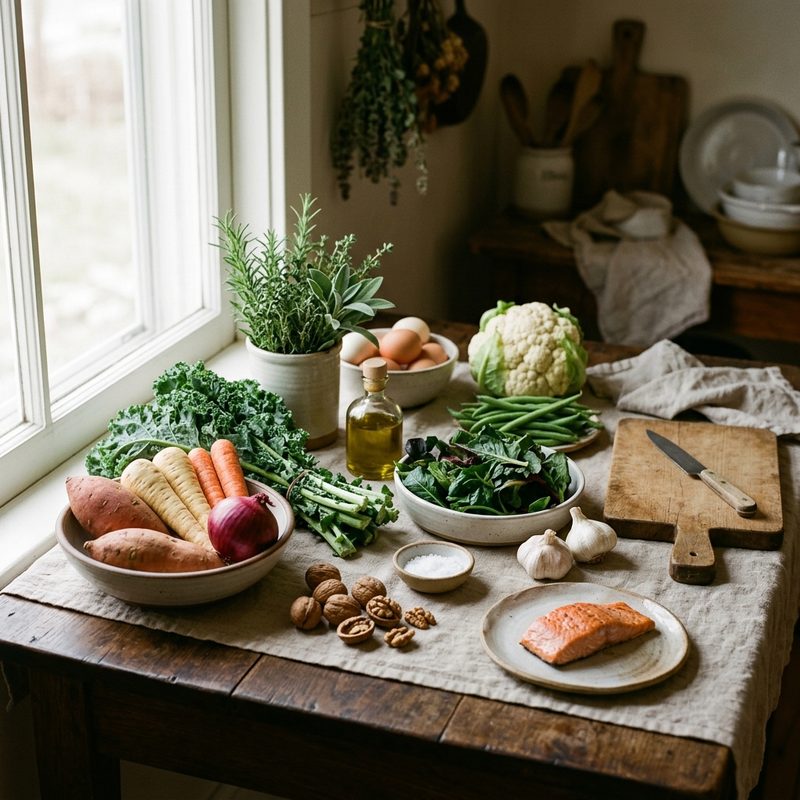
Whole30 excludes all grains, including wheat, rye, barley, oats, corn, and even pseudo-grains like quinoa or buckwheat. To maintain the structure of a meal without these staples, focus on seasonal starches. In the autumn and winter, master the technique of roasting root vegetables like parsnips or sweet potatoes until caramelized. In the spring and summer, practice 'ricing' cauliflower or shredding zucchini into ribbons. The key technique here is moisture control: always salt and drain your vegetable-based 'grains' to prevent a soggy plate.
Step 2: Emulsifying Without Dairy
Dairy products, including milk, cheese, and yogurt, are excluded (with the exception of clarified butter or ghee). To achieve a creamy texture for soups or sauces, rely on the power of fats and nuts. For a dairy-free cream sauce, soak raw cashews in boiling water for fifteen minutes, then blend them with fresh lemon juice and filtered water until silky. For a seasonal variation, whisking a spoonful of tahini into a warm lemon vinaigrette creates a rich, velvety coating for grilled asparagus or roasted squash without the need for cream.
Step 3: Reclaiming Umami Without Legumes or Soy
Legumes—including beans, lentils, peanuts, and all soy products—are omitted from the program. This often leaves a gap in 'umami' or savory depth, especially in recipes that traditionally use soy sauce or miso. The technique to master here is the use of coconut aminos combined with fermented flavors. Use a splash of coconut aminos for sweetness and salt, balanced with high-quality fish sauce (check for no added sugar) to provide that deep, savory backbone to stir-fries and marinades.
Step 4: Decoding Labels for Hidden Additives
Beyond the major food groups, Whole30 excludes added sugars (real or artificial), alcohol, and specific additives like carrageenan, MSG, and sulfites. When sourcing ingredients from your local market, the skill is in reading the 'Ingredients' list rather than the marketing claims. Look for canned goods like coconut milk or tomato puree that contain only the primary ingredient and water. In the kitchen, replace the depth of wine in pan sauces with a reduction of high-quality bone broth and a squeeze of seasonal citrus to achieve the necessary acidity.