Mains and Suppers
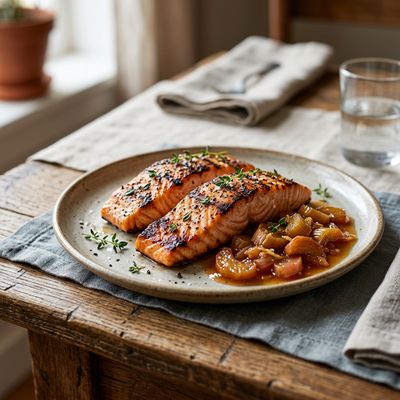
Baked Salmon with Coconut Aminos and Ginger-Garlic Glaze
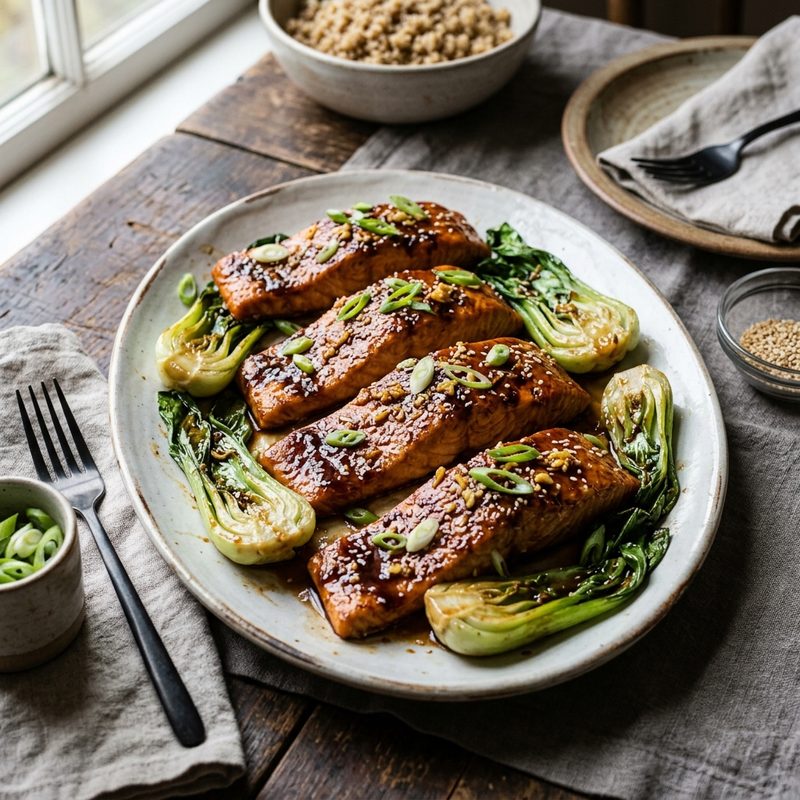
This oven-roasted salmon features a savory-sweet glaze made from coconut aminos, perfectly balanced with aromatic ginger and garlic. Served alongside seasonal greens, it’s a vibrant, nourishing meal that highlights the natural richness of wild-caught fish.
- Prep
- 10 min
- Cook
- 15 min
- Serves
- 4
- Level
- Easy
- Per serving
- 385 kcal
Method
Preheat your oven to 400°F (200°C) and line a large sheet pan with parchment paper.
In a small bowl, whisk together the coconut aminos, grated ginger, minced garlic, toasted sesame oil, and honey until well combined.
Place the salmon fillets on one side of the prepared sheet pan. Arrange the halved baby bok choy on the other side.
Pour about two-thirds of the glaze over the salmon fillets, ensuring they are well coated. Drizzle the remaining glaze and a touch of extra sesame oil over the bok choy.
Place the pan in the oven and bake for 12 to 15 minutes, depending on the thickness of the fillets. The salmon should be opaque and flake easily with a fork, while the greens should be tender-crisp with slightly charred edges.
Remove from the oven. Garnish the salmon with sliced green onions and toasted sesame seeds before serving.
Notes
For a deeper flavor, let the salmon marinate in the coconut amino mixture for 20 minutes in the refrigerator before baking.
If baby bok choy isn't in season, substitute with thick asparagus spears or broccolini florets.
To achieve a more caramelized finish, turn on the broiler for the last 2 minutes of cooking, watching closely to prevent burning.
This recipe is naturally grain-free; serve with cauliflower rice or roasted sweet potatoes to maintain a whole-food, paleo-friendly approach.