Grain Free and Paleo
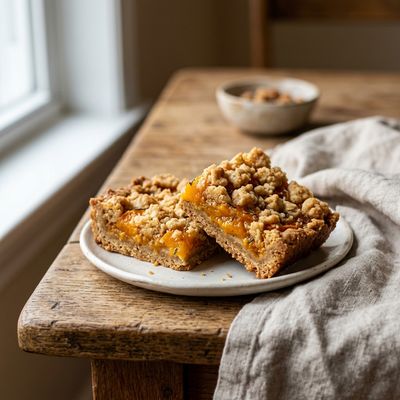
Grain-Free Peach and Blueberry Cobbler with Almond Flour Crumble
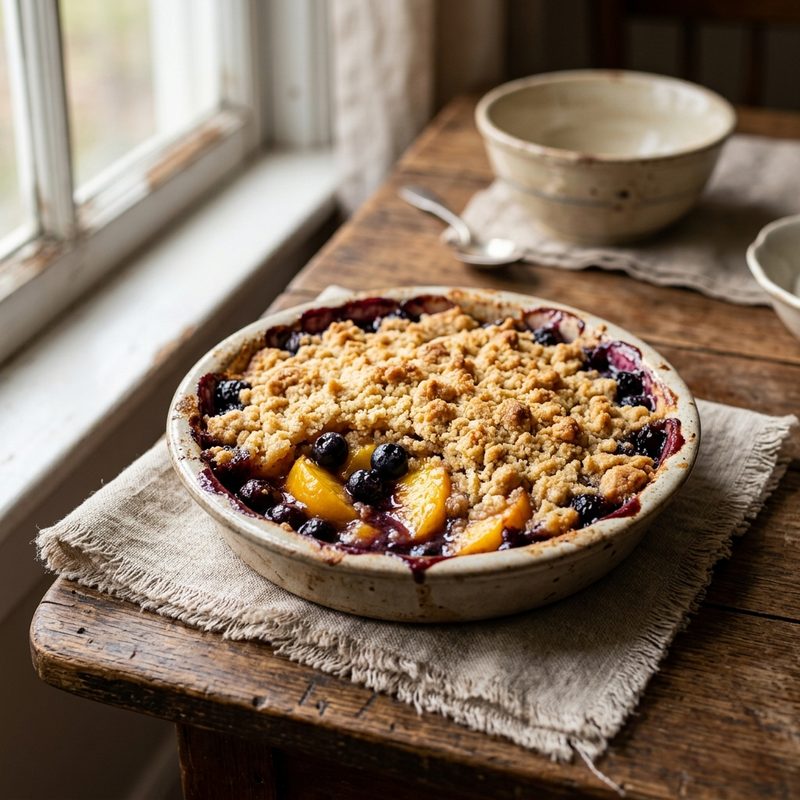
This rustic cobbler celebrates the peak of summer with jammy yellow peaches and bursting blueberries tucked under a golden, grain-free almond crust. It is a simple, crowd-pleasing dessert that highlights real, seasonal ingredients with a satisfyingly crisp and buttery topping.
- Prep
- 15 min
- Cook
- 30 min
- Serves
- 4
- Level
- Easy
- Per serving
- 385 kcal
Method
Preheat your oven to 375°F (190°C) and lightly grease a 9-inch pie dish or square baking pan with butter or coconut oil.
Prepare the filling: Pit and slice the peaches into 1/2-inch thick wedges. In a large bowl, combine the peaches, blueberries, maple syrup, lemon juice, and arrowroot starch. Toss gently until the fruit is evenly coated.
Transfer the fruit mixture into the prepared baking dish, spreading it out into an even layer.
Prepare the topping: In a separate medium bowl, whisk together the almond flour, ground cinnamon, and sea salt. Stir in the melted butter (use coconut oil for a dairy-free version), whisked egg, and vanilla extract until a thick, slightly clumpy dough forms.
Using your hands or a spoon, drop dollops of the dough over the fruit. Avoid smoothing it out; the gaps allow steam to escape and the fruit to bubble through.
Bake for 28 to 32 minutes, or until the fruit juices are bubbling and the topping has turned a deep golden brown.
Remove from the oven and allow the cobbler to cool for at least 15 minutes before serving. This pause is crucial as it allows the fruit juices to thicken into a jam-like consistency.
Notes
To make this recipe dairy-free, simply swap the grass-fed butter for melted coconut oil.
Choose peaches that are fragrant and slightly soft to the touch; if they are too firm, the cobbler will lack sweetness and moisture.
If the topping is browning too quickly before the fruit is bubbling, loosely tent the dish with foil for the last 10 minutes of baking.
For a nut-free variation, you can experiment with sunflower seed flour, though it may turn slightly green due to a reaction with leavening agents or acids.